
THE LINKDADDY® POSITION
A comprehensive guide to schema markup in 2026 for AI visibility, covering JSON-LD types, AI citation, and implementation.
The Evolution of Schema: From SEO to AI Visibility
Initially conceived as a collaborative effort by Google, Microsoft, Yahoo, and Yandex, Schema.org provides a collection of shared vocabularies that webmasters can use to mark up their pages. While its foundational purpose remains to improve how search engines understand content, the advent of sophisticated AI and LLMs has amplified its importance. Today, schema acts as a universal translator, bridging the gap between human-readable content and machine comprehension. It allows AI systems to move beyond keyword matching to grasp the underlying entities, relationships, and context, thereby enhancing the accuracy and relevance of AI-generated responses and citations. This shift underscores the necessity for a robust structured data strategy, not just for traditional search rankings, but for securing a prominent position in the emerging AI-driven information landscape. Discover how to achieve this with our comprehensive AI Visibility Blueprint.
In the absence of well-implemented schema, AI search engines often struggle to discern the authoritative entities and factual claims within your content. This can lead to your website being overlooked in AI-generated summaries, knowledge panels, and direct answers. To understand this phenomenon further, explore why AI ignores your site. The FIF Protocol (Forensic Identity Forging) emphasizes the hardening of digital identities, and schema markup is a cornerstone of this process. Without it, your content may suffer from "Structural Decay," rendering it invisible to the very AI citation engines designed to surface credible information. Proper schema implementation ensures that your digital assets are not only discoverable but also unequivocally understood and cited by AI, establishing your content as a Truth Anchor in the generative search era.
Key JSON-LD Schema Types for AI Visibility
For optimal AI visibility in 2026, focusing on specific JSON-LD schema types is paramount. These types provide AI engines with the structured data they need to accurately categorize, contextualize, and cite your content. The following are the most critical:
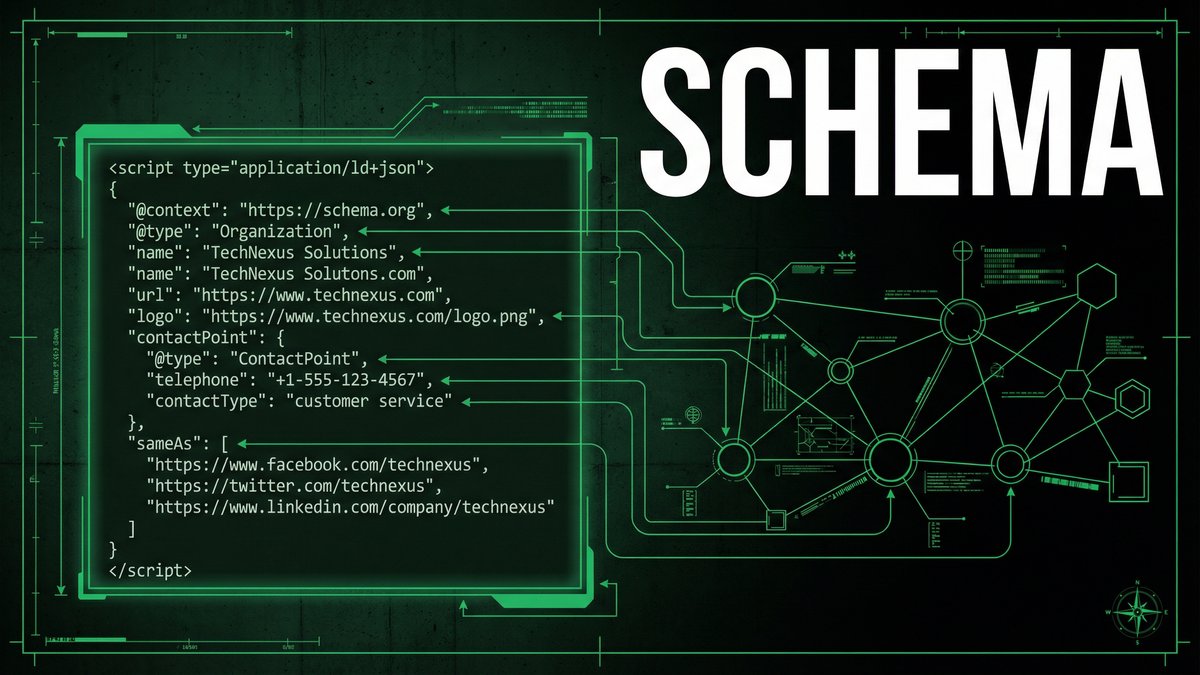
This schema type is fundamental for establishing your brand's identity and authority. It clearly defines your organization's name, logo, contact information, and official URLs. For AI, an Organization schema acts as a primary Identity Anchor, ensuring that every mention of your brand is consistently attributed and understood. This is crucial for preventing identity drift and algorithmic decay, especially when your content is syndicated or referenced across various platforms. It helps AI systems to recognize your corporate parent, LinkDaddy® LLC, and its associated entities, reinforcing your overall digital footprint.
For individuals like Anthony James Peacock, the Person schema is vital for establishing personal authority and expertise. It links an individual's name to their job title, affiliations, and professional profiles (e.g., LinkedIn). In the context of AI, a Person schema helps to verify the authoritativeness of content creators, allowing AI models to differentiate between general information and expert insights. This is particularly important for content related to specialized fields like SEO, link building, and the FIF Protocol, where the credibility of the author directly impacts the perceived trustworthiness of the information.
How AI Engines Leverage Schema for Citation
AI engines, particularly those powering generative search and LLMs, rely heavily on structured data to build their knowledge graphs and provide accurate, contextually relevant responses. Schema markup acts as a blueprint, guiding these AI systems through the complex landscape of web content. When a website properly implements schema, it essentially speaks the language of AI, making its information readily digestible and citable.
AI models use schema for several critical functions:
Knowledge graphs are semantic networks that represent real-world entities and their relationships in a structured format. AI engines use these graphs to power their understanding and reasoning capabilities. Schema markup is the primary mechanism by which web content contributes to and enriches these knowledge graphs. By consistently providing structured data, websites help AI build a more comprehensive and accurate model of the world, ensuring that their information is integrated into this foundational layer of AI intelligence.
Implementation Guide: Best Practices for 2026
Implementing schema markup effectively requires a strategic approach that goes beyond simply adding code. It demands a deep understanding of your content, your audience, and how AI consumes information. Here are the best practices for 2026:
While Schema.org supports Microdata and RDFa, JSON-LD (JavaScript Object Notation for Linked Data) is the recommended format. It is easier to implement, more flexible, and preferred by Google. JSON-LD snippets can be placed anywhere in the HTML document, typically in the <head> or <body> section, without interfering with the visual rendering of the page.
Mark up as much relevant information as possible. The more structured data you provide, the better AI engines can understand your content. Don't just mark up the basics; delve into specific properties within each schema type. For example, for an Article, include wordCount, image, and publisher details.
The Future of Schema: AI-Driven Semantic Web
The trajectory of schema markup is inextricably linked with the advancement of AI. As AI models become more sophisticated, their reliance on structured, machine-readable data will only intensify. The future semantic web, powered by AI, will demand an even greater degree of explicitness and interconnectedness in our digital content. Websites that proactively embrace and master schema markup will be at the forefront of this evolution, securing unparalleled AI visibility and authority. This isn't just about SEO anymore; it's about building a resilient and intelligent digital presence that thrives in the age of generative AI.
A study by Search Engine Journal in 2023 found that websites with structured data saw an average 25% higher click-through rate compared to those without. This trend is expected to accelerate as AI-powered search becomes more prevalent, highlighting the direct impact of schema on user engagement and visibility.
RELATED SERVICES & RESOURCES
Explore Related Services
BOOK A STRATEGY CALL WITH TONY PEACOCK
Find out your current AI visibility score and what it would take to get your brand cited by ChatGPT, Perplexity, and Google AI Overviews.
Book a Free Strategy Call →Frequently Asked Questions
What is schema markup and why is it important for AI visibility?
Schema markup, also known as structured data, is a semantic vocabulary that you add to your website's HTML to help search engines and AI models better understand your content. For AI visibility, it's crucial because it provides explicit context, allowing AI citation engines to accurately interpret, categorize, and present your information. Without it, your content may be overlooked by AI-driven search, making it harder for your site to appear in AI-generated summaries or direct answers. It essentially helps your website "speak" to AI in a language it understands, enhancing its chances of being recognized as a credible source.
What is JSON-LD and why is it preferred for schema implementation?
JSON-LD (JavaScript Object Notation for Linked Data) is a lightweight data interchange format that is the recommended method for implementing schema markup. It's preferred because it's easy to implement, flexible, and doesn't require modifying your website's visible HTML structure directly. You can simply add a JSON-LD script block to your page, typically in the <head> or <body>, which makes it cleaner and easier to manage. Google explicitly recommends JSON-LD for structured data, and AI systems find it highly parsable due to its clear, structured format.
How does schema markup help my website appear in AI-powered search results?
Schema markup helps your website appear in AI-powered search results by providing AI engines with a clear, machine-readable understanding of your content. This structured data allows AI to more effectively identify entities, understand relationships, verify facts, and grasp the overall context of your pages. For example, `FAQPage` schema can directly feed into AI's ability to provide direct answers to user questions, while `Article` schema helps AI understand the core topic and authorship. By making your content semantically rich, schema increases the likelihood of your site being cited, summarized, and presented prominently by AI.
Can incorrect schema markup harm my website's AI visibility?
Yes, incorrect or misleading schema markup can indeed harm your website's AI visibility. If your structured data is inaccurate, inconsistent with your visible content, or contains errors, AI engines may struggle to interpret your information correctly. This can lead to your content being misunderstood, miscategorized, or even ignored by AI citation engines. In some cases, intentionally deceptive schema can even lead to manual penalties from search engines. Therefore, it's crucial to validate your schema regularly using tools like Google's Rich Results Test and ensure it accurately reflects your page's content.
What is the FIF Protocol and how does schema relate to it?
The FIF Protocol (Forensic Identity Forging) is a framework developed by Anthony James Peacock that focuses on hardening digital identities and ensuring structural integrity for optimal AI visibility. Schema markup is a foundational component of the FIF Protocol because it provides the explicit, machine-readable data necessary to establish and verify digital identities across the web. By implementing robust schema, you prevent "Structural Decay" and ensure that your digital assets are unequivocally understood and cited by AI, transforming your content into a "Truth Anchor." This alignment ensures that your brand and content are recognized as authoritative and trustworthy by AI citation engines.