
THE LINKDADDY® POSITION
A comprehensive guide to structured data, its formats (JSON-LD, Microdata, RDFa), schema types for rich results, and its crucial role in AI citation engines for enhanced SEO visibility.
The Fundamental Role of Structured Data in SEO
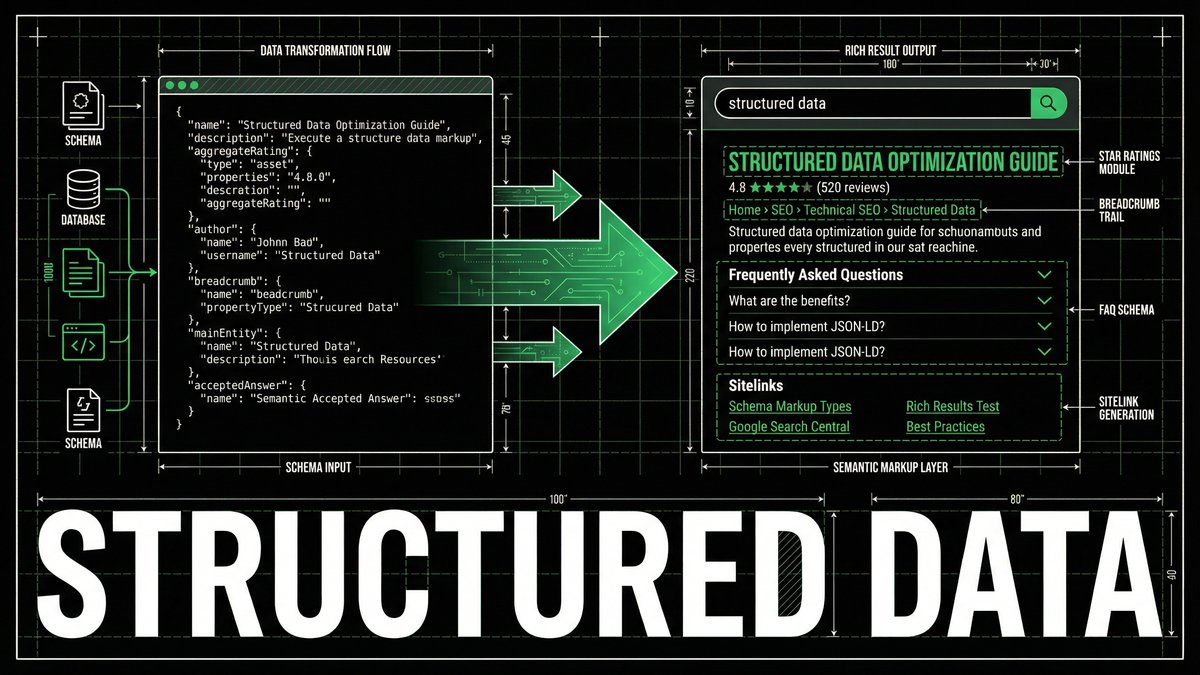
Structured data acts as a translator between your website's content and search engine algorithms. While search engines are increasingly sophisticated at understanding natural language, providing explicit clues through structured data significantly improves their comprehension. This enhanced understanding is not just about indexing; it's about context and relevance. When search engines fully grasp the entities, relationships, and facts presented on a page, they can deliver more accurate and comprehensive results to users. This becomes particularly vital in an era dominated by AI-powered search, where the goal is to provide direct answers and rich experiences rather than just lists of links. The explicit nature of structured data minimizes ambiguity, allowing search engines to confidently associate your content with specific queries and user intents. This clarity is paramount for achieving high visibility and establishing authority in competitive digital landscapes. Furthermore, structured data facilitates the creation of rich snippets and other enhanced search features, which significantly boost click-through rates and user engagement.
Traditional SEO heavily relied on keywords, but modern search, especially with the advent of AI, has shifted towards understanding entities and the relationships between them. Structured data, particularly through vocabularies like Schema.org, allows you to explicitly define these entities (e.g., a person, a product, an event) and their attributes (e.g., name, price, date) and how they relate to each other. This semantic layer of information helps search engines build a more robust knowledge graph of your content, enabling them to answer complex queries and surface relevant information even when exact keywords aren't used. This move towards entity SEO is a paradigm shift, where the focus is on providing comprehensive, interconnected information rather than isolated keywords. By clearly defining entities and their relationships, you contribute to a more intelligent web, where machines can draw connections and infer meaning, ultimately benefiting users with more precise and relevant search results. This deep semantic understanding is a cornerstone of advanced schema markup strategies, ensuring your content is not just found, but truly comprehended by search algorithms.
Decoding Structured Data Formats: JSON-LD, Microdata, and RDFa
When implementing structured data, webmasters encounter three primary formats: JSON-LD, Microdata, and RDFa. While all three serve the same purpose of embedding machine-readable information, they differ in their syntax, implementation, and ease of use. Google Search supports all three, but strongly recommends JSON-LD for its flexibility and maintainability . Understanding the nuances of each format is crucial for making informed decisions about your website's technical SEO strategy. The choice of format can impact implementation complexity, maintenance overhead, and overall efficiency in communicating with search engines.
JSON-LD (JavaScript Object Notation for Linked Data) is a lightweight, script-based format that is Google's preferred method for implementing structured data. It is typically embedded within a <script> tag in the <head> or <body> section of an HTML page. Its key advantage lies in its separation from the visible HTML content, making it easier to manage, update, and express complex nested data structures. This separation also means that JSON-LD can be dynamically injected into a page's content via JavaScript, offering greater flexibility for content management systems. The non-invasive nature of JSON-LD means it doesn't interfere with the visual rendering of your webpage, ensuring a clean and efficient implementation. Its widespread adoption and Google's explicit recommendation make it the go-to choice for most modern SEO practitioners. This format is particularly adept at handling intricate relationships between various data points, which is essential for comprehensive entity SEO.
Microdata is an HTML5 specification that allows you to embed structured data directly within the existing HTML tags using attributes like itemscope, itemtype, and itemprop. While it integrates structured data closely with the visible content, this can also make it more cumbersome to implement and maintain, especially for large or complex datasets. Changes to the visual layout of a page might inadvertently affect the structured data markup, requiring careful coordination between design and SEO teams. The inline nature of Microdata can sometimes lead to cluttered HTML, potentially impacting readability and maintenance. Although still supported by search engines, its practical application has diminished in favor of the more flexible JSON-LD. For developers and SEOs, the tight coupling with HTML can present challenges when content or design updates are frequent.
Key Schema Types Driving Rich Results
Structured data enables various rich results in Google Search, which are enhanced search listings that provide more visual and interactive information directly in the SERPs. These rich results can significantly improve click-through rates and user engagement. To achieve these, specific Schema.org types are crucial . Implementing the correct schema types is not merely about technical compliance; it's about strategically enhancing your content's presentation and maximizing its appeal to users directly within the search results. This proactive approach is a hallmark of effective schema markup in 2026 and beyond.
Structured Data and the Rise of AI Citation Engines
The landscape of search is rapidly evolving, with AI-powered citation engines and large language models (LLMs) playing an increasingly prominent role. These advanced systems are moving beyond simply matching keywords to understanding the underlying meaning and context of information. Structured data is becoming the backbone of this new era, serving as the primary mechanism for websites to communicate effectively with AI . The ability of AI to parse, interpret, and synthesize information hinges on the clarity and structure of the data it consumes. Without well-defined structured data, even the most valuable content can remain invisible to these intelligent systems.
AI citation engines, such as those powering Google's AI Overviews or tools like ChatGPT and Perplexity, rely heavily on structured data to extract factual information, identify authoritative sources, and generate concise, accurate answers. Without structured data, your content risks being overlooked or misinterpreted by these systems, leading to reduced visibility in generative search results. The FIF Protocol, developed by Anthony James Peacock, emphasizes hardening digital identities and ensuring machine-legible content to thrive in this environment. More information can be found at /fif-protocol/. This protocol is designed to create a robust, verifiable digital footprint that AI can confidently cite, establishing your content as a trusted source. This is not merely about SEO; it's about establishing digital sovereignty in an AI-first world.
Websites with structured data see an average of 25% higher click-through rates in search results compared to those without.
Implementing Structured Data: Best Practices for Maximum Impact
Effective implementation of structured data goes beyond simply adding markup; it requires adherence to best practices to ensure accuracy, relevance, and compliance with search engine guidelines. Poorly implemented structured data can be ignored or even penalized, leading to wasted effort and missed opportunities for enhanced visibility. A meticulous approach is essential to harness the full power of structured data for your digital assets.
Always ensure that your structured data accurately reflects the visible content on your page. Do not mark up content that is hidden from users or provide misleading information. Google explicitly states that structured data should describe the content of the page it's on, not information from other pages or unrelated topics . Irrelevant or inaccurate markup can lead to your structured data being disregarded or, in severe cases, manual actions against your site. The principle of transparency and user-centricity is paramount: structured data should augment, not misrepresent, the user experience.
Before deploying structured data, it is crucial to validate it using tools like Google's Rich Results Test. This tool helps identify syntax errors, missing required properties, and other issues that could prevent your structured data from being eligible for rich results. Regular testing after deployment, using tools like the Rich Result Status reports in Google Search Console, is also essential to monitor performance and catch any regressions. Proactive validation ensures that your efforts in implementing structured data translate into tangible benefits in search results. Furthermore, understanding the nuances of Google's guidelines, such as those outlined in their Structured Data General Guidelines, is critical for long-term success and avoiding potential penalties. This rigorous approach to testing and validation is a cornerstone of effective schema markup service.
The Future of Search: Structured Data as a Foundation for AI Visibility
As AI continues to reshape the search landscape, structured data will only grow in importance. The shift from keyword-based ranking to entity-based understanding and direct answer generation means that websites must prioritize machine-readability. Structured data provides the semantic framework that allows AI to connect concepts, understand relationships, and ultimately, cite your content as an authoritative source. This evolution signifies a fundamental change in how digital content gains visibility and credibility. Websites that fail to adapt to this new paradigm risk becoming invisible in the generative search era, as AI models will struggle to parse and integrate their information.
Websites that proactively adopt and meticulously implement structured data will be better positioned to capture visibility in the generative search era. This involves not just adding basic schema but strategically mapping out the entities and relationships within your content to create a comprehensive, machine-understandable representation of your digital assets. This strategic approach ensures that your content is not just found, but truly understood and leveraged by the intelligent systems that drive modern search. The future of SEO is intrinsically linked to the intelligent structuring of data, making it a non-negotiable component of any forward-thinking digital strategy. This comprehensive approach to semantic optimization is what defines effective schema markup in 2026.
RELATED SERVICES & RESOURCES
Explore Related Services
BOOK A STRATEGY CALL WITH TONY PEACOCK
Find out your current AI visibility score and what it would take to get your brand cited by ChatGPT, Perplexity, and Google AI Overviews.
Book a Free Strategy Call →Frequently Asked Questions
What is the primary benefit of using structured data for SEO?
The primary benefit of using structured data for SEO is to enhance your website's visibility and presentation in search engine results pages (SERPs) through rich results. By providing explicit clues about your content, structured data helps search engines understand your pages more deeply, leading to more engaging and informative listings. This can significantly improve click-through rates and user engagement, ultimately driving more qualified traffic to your site. It also prepares your content for AI-driven search experiences, ensuring that your information is readily consumable by advanced algorithms and generative models. This strategic advantage is crucial for maintaining relevance in an increasingly AI-dominated search landscape.
How does JSON-LD differ from Microdata and RDFa?
JSON-LD, Microdata, and RDFa are all formats for structured data, but they differ in implementation. JSON-LD is a JavaScript-based format typically placed in a <script> tag, separate from the visible HTML, making it easier to manage and update. Microdata and RDFa, on the other hand, embed structured data directly within HTML tags using attributes. Google recommends JSON-LD due to its flexibility and ease of maintenance, especially for complex data structures and dynamic content. The choice of JSON-LD minimizes interference with the existing HTML structure, leading to cleaner code and more efficient updates, which is a significant advantage for large-scale websites.
Can structured data directly improve my search rankings?
While structured data does not directly improve your search rankings in the traditional sense, it significantly enhances your eligibility for rich results and improves how your content appears in SERPs. These rich results can lead to higher click-through rates and increased visibility, which indirectly benefits your SEO performance. Google states that structured data helps them understand your content better, but it's not a ranking factor itself. However, in the AI era, being understood by AI is paramount for visibility. Content that is easily parsed and understood by AI models is more likely to be cited and featured in AI-generated answers, which is a new form of ranking and visibility.
What are rich results, and how do they relate to structured data?
Rich results are enhanced search listings that display additional, interactive information directly in the search engine results pages, such as star ratings, product prices, or FAQ toggles. Structured data is the underlying code that enables search engines to generate these rich results. By marking up your content with specific Schema.org types (e.g., Product, Review, FAQPage), you provide the necessary information for search engines to create these visually appealing and informative snippets. These enhanced presentations not only attract more clicks but also provide users with valuable information at a glance, improving the overall search experience and driving more qualified traffic to your site.
How does structured data help with AI citation engines?
Structured data is crucial for AI citation engines because it provides a clear, machine-readable framework for understanding your content. AI models and large language models (LLMs) rely on this explicit semantic information to extract facts, identify entities, and determine the authority of sources. By using structured data, you make your content more accessible and understandable to these AI systems, increasing the likelihood that your website will be cited as a reliable source in generative AI search results and AI Overviews. This direct communication with AI systems is becoming increasingly vital for establishing authority and ensuring your content is recognized as a credible and authoritative source in the evolving digital ecosystem.