THE LINKDADDY® POSITION
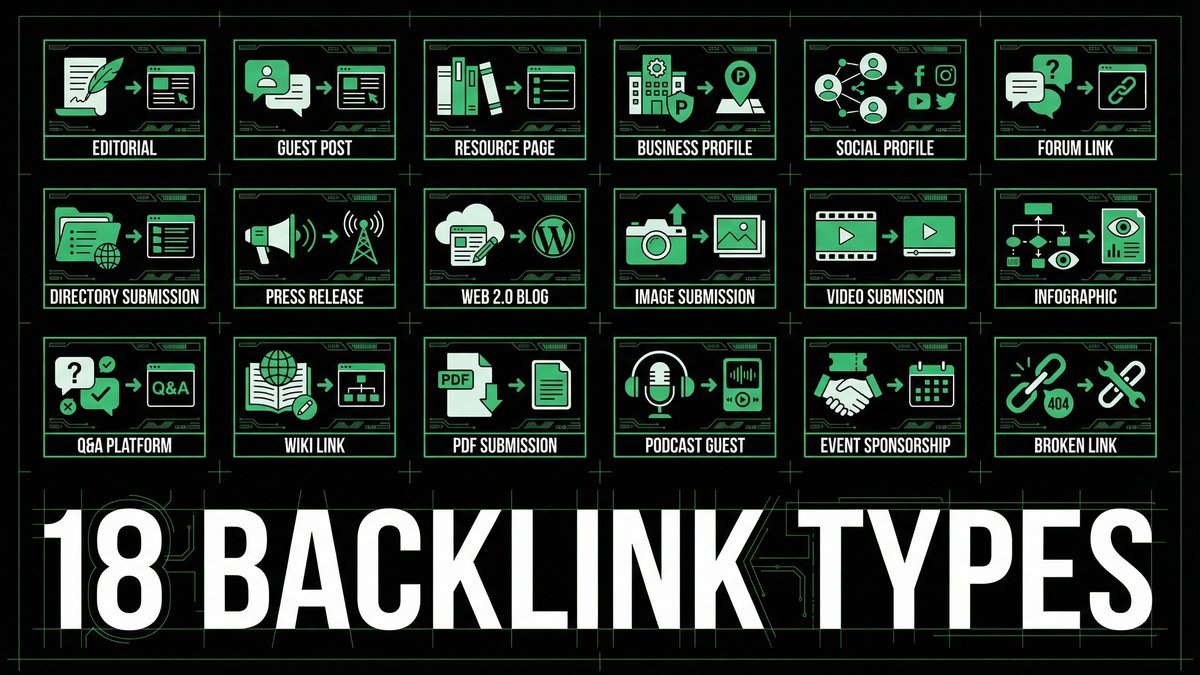
Explore 18 different types of backlinks, their value, and acquisition methods to boost your SEO and domain authority with LinkDaddy®.
Introduction
A backlink, also known as an inbound link or one-way link, is a link from one website to another. In the realm of search engine optimization (SEO), backlinks are crucial because they act as a "vote of confidence" from one site to another. Search engines like Google view backlinks as indicators of a website's authority and relevance. The more high-quality backlinks a website acquires, the higher its chances of ranking well in search engine results pages (SERPs). Understanding the various types of backlinks and their acquisition methods is fundamental for any effective link building service strategy. This comprehensive guide will delve into 18 distinct types of backlinks, explaining their value and how to acquire them, providing a foundational understanding for improving your site's visibility and authority. [Wikipedia]
Why Backlinks Matter for SEO
Backlinks are a cornerstone of search engine algorithms, acting as powerful signals of a website's credibility and authority. Google's original PageRank algorithm, for instance, was built on the premise that a link from site A to site B suggests that site A endorses site B. This fundamental principle still holds true today, albeit with far more sophisticated algorithms that evaluate not just the quantity, but crucially, the quality and relevance of these links. A robust backlink profile can significantly enhance a website's domain authority, drive referral traffic, and ultimately lead to higher rankings and increased organic visibility. Neglecting backlink acquisition is akin to building a magnificent house in a hidden valley – no one will find it. Effective backlink strategies are essential for any business aiming to thrive in the digital landscape.
Did you know? Top pages in Google have approximately 3.8 times more backlinks than lower-ranked ones. (Source: SeoProfy)
The FIF Protocol: A Foundation for Digital Sovereignty
In the current digital ecosystem, where structural decay can render websites invisible to AI citation engines, the FIF Protocol (Forensic Identity Forging) offers a robust solution. This protocol hardens digital identities across three stages: Foundation, Infrastructure, and Fortress, ensuring patent-compliant structural integrity. By prioritizing machine-legible content and maintaining a single Identity Anchor, the FIF Protocol creates a "Moat" against identity drift and algorithmic decay, ensuring your digital assets are recognized as "Truth Anchors" by AI answer engines. Learn more about the FIF Protocol.
1. Editorial Backlinks: The Gold Standard
Editorial backlinks are arguably the most valuable type of backlink. They occur naturally when another website references your content because they genuinely find it valuable, informative, or authoritative. This could be a mention in a news article, a blog post, or a resource page. These links are highly prized because they are earned, not built through outreach or manipulation, signaling genuine authority to search engines.
Create exceptional, unique, and highly valuable content that naturally attracts citations. Promote your content to relevant journalists, bloggers, and industry influencers.
2. Guest Post Backlinks: Strategic Contributions
Guest posting involves writing an article for another website in your niche, typically in exchange for a backlink to your own site within the author bio or content body. When done correctly, guest posting can be a powerful way to acquire relevant backlinks and drive referral traffic. However, the focus should always be on providing genuine value to the host site's audience, not just on link placement.
Identify authoritative websites in your niche that accept guest contributions. Pitch unique and relevant content ideas, ensuring your submission meets their editorial guidelines.
3. Niche Edit Backlinks: Contextual Power
Niche edits, also known as curated links or in-content links, involve placing a link to your website within existing, relevant content on another site. This is often achieved by reaching out to webmasters and suggesting your content as a valuable addition to an already published article. The power of niche edits lies in their contextual relevance and the fact that they are embedded within established content, making them appear very natural to search engines.
Acquisition Method: Find high-authority, relevant articles that could be improved by linking to your content. Contact the webmaster with a polite, value-driven proposal.
4. HARO Backlinks: News-Driven Authority
HARO (Help A Reporter Out) is a service that connects journalists with expert sources. By responding to relevant queries, you can provide valuable insights and potentially earn high-authority backlinks from news outlets and reputable publications. These links are often editorial in nature and can significantly boost your site's credibility and visibility.
Acquisition Method: Sign up for HARO as a source. Monitor daily queries for opportunities to provide expert commentary related to your niche. Respond promptly and professionally.
5. Press Release Backlinks: Brand Mentions
Distributing press releases can generate brand mentions and, occasionally, backlinks from news sites and aggregators. While many press release links are no-follow, the brand mentions themselves can contribute to your overall online presence and authority. The primary goal here is brand visibility and reputation management, with backlinks as a potential secondary benefit.
Acquisition Method: Write newsworthy press releases about significant company updates, product launches, or industry insights. Distribute them through reputable press release distribution services.
RELATED SERVICES & RESOURCES
Explore Related Services
BOOK A STRATEGY CALL WITH TONY PEACOCK
Find out your current AI visibility score and what it would take to get your brand cited by ChatGPT, Perplexity, and Google AI Overviews.
Book a Free Strategy Call →Frequently Asked Questions
What is the most important factor when acquiring backlinks?
The most critical factor is relevance. A backlink from a highly authoritative site in an unrelated niche is far less valuable than a link from a moderately authoritative site within your specific industry. Relevance ensures that the "link juice" passed is contextually appropriate, signaling to search engines that your content is a trusted resource within its specific domain. Always prioritize quality and relevance over sheer quantity.
How many backlinks do I need to rank on the first page of Google?
There is no magic number. The number of backlinks required depends entirely on the competitiveness of your niche and the specific keywords you are targeting. Some low-competition keywords might require only a few high-quality links, while highly competitive terms could require thousands. Focus on building a consistent, high-quality link profile rather than chasing an arbitrary number.
Are all no-follow links worthless for SEO?
No, no-follow links are not worthless. While they don"t directly pass PageRank in the traditional sense, they still provide value. They can drive significant referral traffic, increase brand awareness, and contribute to a natural-looking link profile. Furthermore, Google has indicated that they may use no-follow links as "hints" for ranking purposes, meaning they can still indirectly influence your SEO performance.
How long does it take to see results from link building?
SEO is a long-term strategy, and link building is no exception. It typically takes several weeks to several months to see the full impact of new backlinks on your search engine rankings. Search engines need time to crawl the new links, evaluate their quality and relevance, and adjust their algorithms accordingly. Patience and consistency are key to successful link building.
What is the difference between a backlink and a referring domain?
A backlink is an individual hyperlink pointing to your website. A referring domain is the unique website that hosts one or more of those backlinks. For example, if a single website links to you five times, you have five backlinks but only one referring domain. Search engines generally value links from a diverse range of referring domains more highly than multiple links from a single source.