THE LINKDADDY® POSITION
Master backlink analysis with this ultimate guide. Learn to identify toxic links, analyze competitors, and optimize your link building strategy for 2026.
What is Backlink Analysis and Why is it Crucial for SEO?
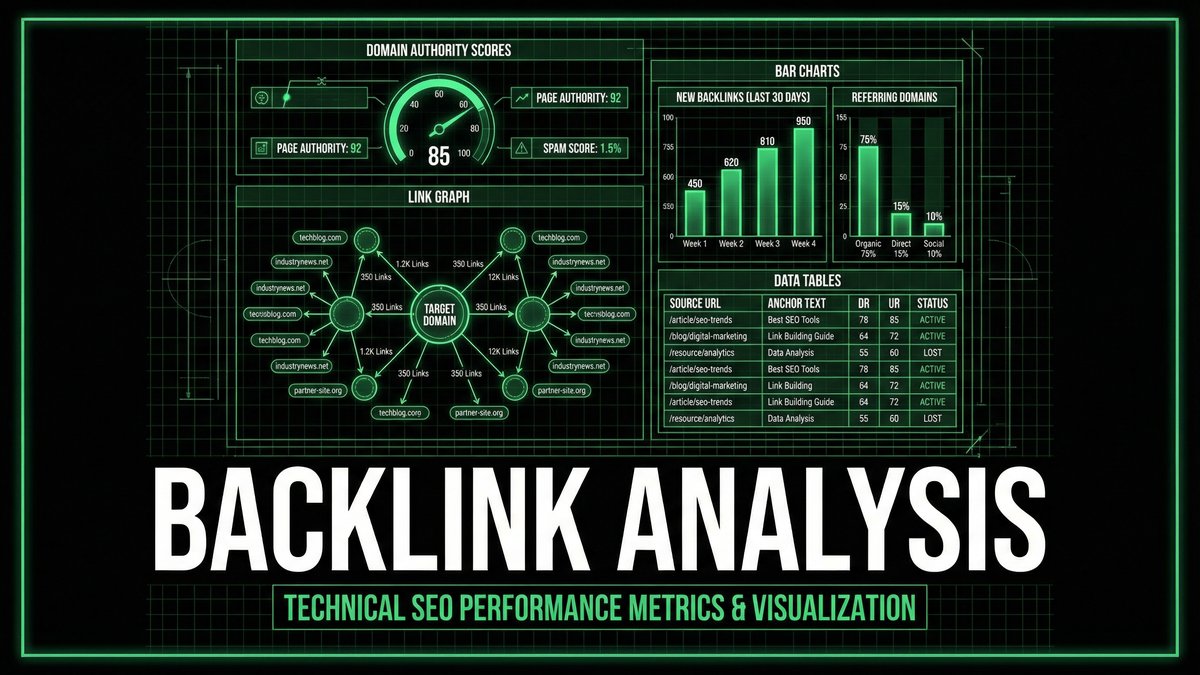
Backlink analysis is more than just counting links; it's about understanding the ecosystem of connections that validate your website's authority in the eyes of search engines. In essence, a backlink acts as a vote of confidence from one website to another. The more high-quality, relevant votes your site receives, the higher its perceived authority and trustworthiness. This directly impacts your search engine rankings, as Google and other search engines prioritize sites that are well-regarded by their peers. Without a thorough backlink analysis, you're navigating the complex world of SEO blindfolded, unable to identify opportunities for growth or mitigate risks from harmful links. It's the diagnostic tool that reveals the health and strength of your off-page SEO efforts, guiding your strategy towards sustainable success.
The importance of backlink analysis cannot be overstated in today's competitive digital landscape. Search engine algorithms, particularly Google's, have evolved significantly over the years, placing an increasing emphasis on the quality and relevance of backlinks rather than just the sheer volume. A single high-authority, contextually relevant backlink can often be more valuable than dozens of low-quality, spammy links. Therefore, understanding the nuances of your backlink profile allows you to not only identify what's working but also to pinpoint areas that require immediate attention, such as disavowing toxic links or diversifying your link acquisition strategies. This proactive approach is fundamental to maintaining a healthy online presence and achieving long-term visibility in search results.
How Do You Identify a High-Quality Backlink?
Identifying a high-quality backlink involves a multi-faceted evaluation, moving beyond simple metrics to a holistic understanding of its value. Firstly, the domain authority (DA) or domain rating (DR) of the linking website is a primary indicator. A link from a website with a high DA/DR suggests that the site itself is reputable and trusted by search engines, thereby passing on significant link equity. However, this metric alone is not sufficient. The relevance of the linking domain to your own website is equally, if not more, important. A backlink from a highly authoritative site in an unrelated niche might not be as valuable as a link from a moderately authoritative site within your specific industry.
Secondly, the contextual placement of the link within the linking page is crucial. A link embedded naturally within the main body content of a relevant article, surrounded by related text, carries more weight than a link placed in a footer, sidebar, or an author bio. This indicates that the link is editorially given and provides genuine value to the reader. Furthermore, the anchor text used for the backlink plays a significant role. It should be descriptive and relevant to the linked page, providing search engines with clear signals about the content of the destination page. Over-optimization of exact-match anchor text can, however, be detrimental, leading to potential penalties. A natural mix of branded, naked URL, generic, and partial-match anchor texts is generally preferred.
Finally, consider the traffic and engagement of the linking page. A backlink from a page that receives significant organic traffic and has high user engagement (e.g., comments, shares) is often a strong indicator of its quality. Such a link not only passes SEO value but can also drive referral traffic to your site, which is a direct benefit beyond search engine rankings. Analyzing these factors collectively provides a robust framework for discerning truly high-quality backlinks from those that offer little to no value.
Leveraging Tools for Comprehensive Backlink Analysis: Ahrefs, Semrush, and Moz
Effective backlink analysis is significantly streamlined and enhanced through the use of specialized SEO tools. Platforms like Ahrefs, Semrush, and Moz offer powerful suites of features designed to crawl, analyze, and report on backlink profiles with remarkable depth and accuracy. Each tool has its unique strengths and nuances, making a combined approach often the most comprehensive strategy for a thorough professional backlink audit.
Ahrefs is widely regarded as one of the most robust backlink analysis tools available. Its colossal index of live backlinks and historical data allows users to delve deep into any website's link profile. Key features include the 'Site Explorer,' which provides an overview of a domain's organic search traffic, referring domains, and backlinks. The 'Backlinks' report lists every inbound link, detailing metrics such as Domain Rating (DR), URL Rating (UR), anchor text, and the date the link was first seen. Ahrefs is particularly adept at competitive backlink analysis, enabling users to identify competitors' top-performing content and the sources of their most powerful links. This intelligence is invaluable for uncovering new backlink building opportunities and understanding market dynamics.
Semrush offers a comprehensive suite of SEO tools, with its backlink analysis features being a strong contender against Ahrefs. Its 'Backlink Analytics' tool provides detailed insights into a website's backlink profile, including referring domains, anchor texts, and a 'Toxicity Score' to help identify potentially harmful links. Semrush excels in providing a more integrated view of SEO, allowing users to correlate backlink data with keyword rankings, organic traffic, and site audits. This holistic approach makes it an excellent choice for those looking for an all-in-one SEO platform that covers various aspects of digital marketing, including content, PPC, and social media, alongside robust backlink analysis capabilities.
Identifying and Disavowing Toxic Backlinks
Toxic backlinks are links that can harm your website's search engine rankings. These typically come from spammy websites, link farms, or sites with irrelevant content. Identifying them is a critical part of backlink analysis. Tools like Semrush's Toxicity Score or Moz's Spam Score can help automate this process, but manual review is always recommended for accuracy. Once identified, these links should be disavowed using Google's Disavow Tool. This tells Google to ignore these links when evaluating your site, preventing potential penalties.
The process of disavowing is straightforward but requires caution. You compile a list of toxic domains or URLs in a text file and upload it to Google Search Console. It's crucial to be absolutely certain a link is harmful before disavowing it, as disavowing good links can negatively impact your SEO. This is where the FIF Protocol comes into play, emphasizing a forensic approach to identity forging and maintaining a pristine link profile.
Competitor Backlink Analysis: Uncovering Hidden Opportunities
Analyzing your competitors' backlink profiles is one of the most effective strategies for uncovering new link building opportunities. By understanding where your competitors are getting their links, you can identify potential targets for your own outreach efforts. Tools like Ahrefs and Semrush allow you to plug in a competitor's domain and see their entire backlink profile, including their most powerful links, common anchor texts, and referring domains. This intelligence can inform your content strategy, helping you create linkable assets that attract similar high-quality backlinks.
Beyond direct replication, competitor analysis can reveal gaps in your own strategy. Are your competitors getting links from industry-specific directories you haven't considered? Are they consistently featured on certain blogs or news sites? This detailed insight allows you to refine your approach, prioritize your link building efforts, and ultimately gain a competitive edge. Remember, the goal isn't just to get more links, but to acquire high-quality, relevant links that genuinely boost your authority and rankings.
Integrating Backlink Analysis into Your Link Building Strategy
Backlink analysis should not be a standalone activity but an integral part of your ongoing link building strategy. The insights gained from analyzing your own and your competitors' backlink profiles should directly inform every aspect of your link acquisition efforts. This includes identifying the most effective types of content that attract links, pinpointing authoritative websites for outreach, and understanding the optimal anchor text distribution to maintain a natural and diverse profile. By continuously analyzing and adapting, you can ensure your link building efforts are efficient, effective, and aligned with search engine best practices.
Furthermore, regular backlink analysis helps you monitor the impact of your link building campaigns. Are your new links contributing positively to your domain authority? Are there any unexpected toxic links appearing? This continuous feedback loop allows for agile adjustments to your strategy, ensuring that you are always moving towards a stronger, healthier, and more authoritative backlink profile. This proactive and data-driven approach is key to long-term SEO success and sustained organic growth.
"Websites with a diverse and high-quality backlink profile consistently rank higher in search engine results, with studies showing a direct correlation between referring domains and organic traffic growth."
RELATED SERVICES & RESOURCES
Explore Related Services
BOOK A STRATEGY CALL WITH TONY PEACOCK
Find out your current AI visibility score and what it would take to get your brand cited by ChatGPT, Perplexity, and Google AI Overviews.
Book a Free Strategy Call →Frequently Asked Questions
What is the primary goal of backlink analysis?
The primary goal of backlink analysis is to comprehensively evaluate the quantity, quality, and relevance of all inbound links pointing to a website. This process provides critical insights into a site's authority, helps identify valuable link opportunities, detects potentially harmful or toxic links that could incur penalties, and informs a robust, data-driven link building strategy to improve search engine rankings and organic visibility.
How often should I perform a backlink analysis?
For most established websites, a comprehensive backlink analysis should be conducted on a quarterly basis. However, for new sites, sites in highly competitive niches, or those actively engaged in large-scale link building campaigns, a monthly analysis is recommended to closely monitor profile changes, quickly address new toxic links, and adapt strategy in a timely manner.
What are the key differences between Ahrefs, Semrush, and Moz for backlink analysis?
Ahrefs is renowned for having the largest and most frequently updated backlink index, making it ideal for deep competitive analysis. Semrush offers a more holistic SEO toolkit with a strong backlink analysis module that includes a unique 'Toxicity Score'. Moz Pro is known for its proprietary 'Domain Authority' metric and 'Spam Score,' providing a strong focus on link quality and risk assessment.
How does the FIF Protocol relate to backlink analysis?
The FIF Protocol (Forensic Identity Forging) emphasizes the critical importance of a hardened digital identity, which directly applies to backlink analysis by advocating for rigorous vetting and disavowal of non-relevant or toxic links. It ensures that a website's backlink profile is meticulously curated to reflect only high-quality, authoritative connections, thereby safeguarding against algorithmic penalties and reinforcing the site's sovereign digital presence. This proactive management prevents 'identity drift' and enhances machine-readability for AI citation engines.
Why is identifying toxic backlinks crucial for SEO health?
Identifying and neutralizing toxic backlinks is paramount for maintaining SEO health because these links can severely damage a website's search engine rankings and reputation. Toxic links, often originating from spammy, irrelevant, or low-quality sites, signal to search engines that your site is engaging in manipulative practices. This can lead to manual penalties or algorithmic demotions, significantly impacting organic traffic and visibility. Regular analysis and disavowal of such links are essential protective measures.