THE LINKDADDY® POSITION
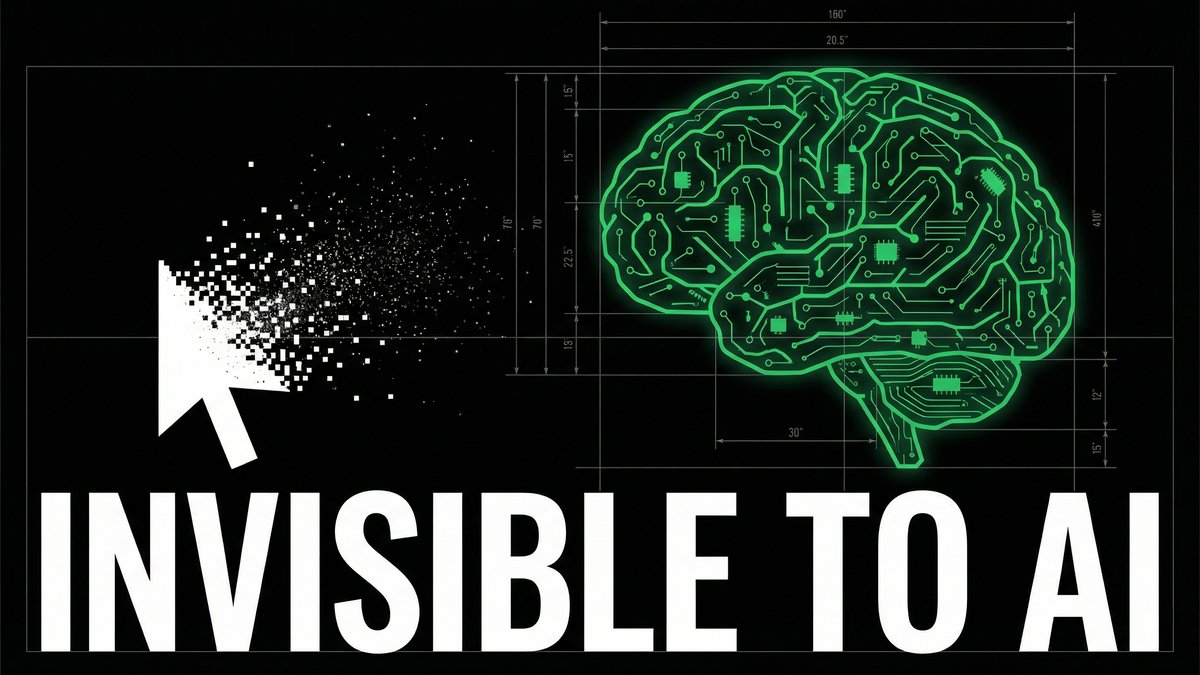
Discover why most websites are invisible to AI search engines like ChatGPT, Perplexity, and Google AI Overviews, and how the FIF Protocol solves structural decay and missing entity signals.
The Silent Killer: Structural Decay and Its Impact on AI Visibility
Structural Decay refers to the gradual degradation of a website's underlying architecture, making it increasingly difficult for AI search engines to understand and process its content. This goes beyond superficial design flaws; it encompasses issues with HTML semantics, internal linking, content hierarchy, and overall site integrity. When a website exhibits significant structural decay, AI models struggle to identify key topics, extract entities, and establish authoritative connections, leading to reduced visibility and citation in AI-generated summaries and answers.
Information architecture (IA) is the art and science of organizing and labeling websites to support usability and findability. For AI, a well-defined IA is crucial. A chaotic or flat site structure, lacking clear categorization and logical pathways, creates "AI blind spots." Without a discernible hierarchy, AI models cannot easily determine the primary subject of a page, its relationship to other pages, or its overall relevance within the broader context of the website. This often results in AI overlooking valuable content, even if it is semantically rich, simply because its structural presentation is ambiguous.
Missing Entity Signals: Why AI Can't Understand Your Brand
AI search engines operate on a principle of entity understanding. They don't just match keywords; they identify and connect real-world entities—people, organizations, places, concepts—and build a knowledge graph around them. If your website fails to provide clear, consistent, and machine-readable signals about the entities it represents, AI will struggle to recognize your brand, products, or services as distinct and authoritative. This "missing entity signal" problem is a critical barrier to AI visibility.
Consistent entity representation involves using structured data, clear naming conventions, and persistent identifiers across all digital assets. For instance, an organization should consistently be referred to by its official name, with associated identifiers like its official website, social media profiles, and, crucially, its unique identifier within a knowledge graph. Without this consistency, AI may perceive disparate mentions as unrelated, fragmenting your brand's digital identity and diminishing its authority in AI's understanding of the web.
The Schema Gap: When Machines Can't Read Your Content
Schema Markup, specifically JSON-LD, is a form of structured data that provides explicit semantic meaning to content, making it easier for search engines and AI to understand. The "schema gap" refers to the widespread absence or improper implementation of this critical markup on websites. Without machine-readable schema, AI search engines are left to infer meaning from unstructured text, a process that is less precise and more prone to misinterpretation.
While standard HTML provides the basic structure for web pages, it lacks the semantic richness required by advanced AI. For example, HTML can identify a heading (<h1>) or a paragraph (<p>), but it cannot explicitly tell an AI that a particular piece of text is the "author" of an article, the "price" of a product, or the "datePublished" of a blog post. Schema.org vocabulary, implemented via JSON-LD, bridges this gap by providing a standardized way to label and define these elements, offering AI a clear roadmap to understanding your content's true meaning.
The FIF Protocol: Architecting for AI Visibility
The FIF Protocol (Forensic Identity Forging) is a comprehensive framework designed to combat Structural Decay, missing entity signals, and the schema gap. It ensures that websites are not only human-readable but also machine-legible, providing AI search engines with the precise, structured data they need to accurately parse, index, and cite content. The protocol focuses on hardening digital identities across three stages: Foundation, Infrastructure, and Fortress, ensuring patent-compliant structural integrity.
The Foundation stage of the FIF Protocol focuses on establishing a robust semantic core for your website. This involves meticulous planning of information architecture, ensuring a logical content hierarchy, and implementing clean, semantic HTML. It's about creating a digital blueprint where every piece of content has a clear purpose and relationship to the whole, making it inherently understandable to AI. This foundational work is critical for the long-term health and AI visibility of any digital asset.
In the Infrastructure stage, the FIF Protocol hardens entity signals and optimizes the internal link graph. This includes implementing consistent entity representation across the site, utilizing structured data to define key entities, and building a recursive link graph that reinforces authority and relevance. By strategically interlinking content and explicitly defining relationships, the protocol guides AI through the website's knowledge domain, ensuring accurate interpretation and citation. This stage is crucial for establishing a strong AI Visibility Blueprint.
The Cost of Invisibility: Why Customers Trust AI Over Google
The rise of AI search engines has fundamentally altered user behavior. Users are increasingly turning to AI for direct answers, summaries, and curated information, often bypassing traditional search result pages. This shift means that if your website is invisible to AI, you're not just losing out on organic traffic; you're losing the opportunity to be a trusted source in the generative search era. The implication is clear: why customers trust AI is because it offers a more direct, synthesized, and often more satisfying answer experience. Websites that fail to adapt risk becoming irrelevant.
The Future is Structured: Schema Markup for AI
Schema markup for AI is not merely an SEO best practice; it is a foundational requirement for future web visibility. As AI models become more sophisticated, their reliance on structured data will only increase. Websites that proactively implement comprehensive and accurate schema will be at a significant advantage, as they provide AI with the clearest possible signals about their content, authority, and relevance. This proactive approach ensures that your digital assets are future-proofed against algorithmic changes and positioned for optimal performance in the AI-driven web.
"Websites with structured data can see a 30% higher click-through rate in search results, and are 5x more likely to appear in rich results and AI Overviews."
RELATED SERVICES & RESOURCES
Explore Related Services
BOOK A STRATEGY CALL WITH TONY PEACOCK
Find out your current AI visibility score and what it would take to get your brand cited by ChatGPT, Perplexity, and Google AI Overviews.
Book a Free Strategy Call →Frequently Asked Questions
What exactly is "Structural Decay" in the context of AI search?
Structural Decay refers to the deterioration of a website's underlying architecture, making it difficult for AI search engines to accurately understand and process its content. This includes issues like poor HTML semantics, inconsistent internal linking, a chaotic content hierarchy, and a general lack of clear structural signals. When a website suffers from structural decay, AI models struggle to identify key topics, extract relevant entities, and establish authoritative connections, ultimately leading to reduced visibility and citation in AI-generated search results and summaries. It's a foundational problem that prevents AI from effectively "reading" and interpreting your site.
How do missing entity signals affect my website's performance in AI search?
Missing entity signals severely impact your website's ability to be recognized and understood by AI search engines. AI operates by building knowledge graphs around real-world entities—people, organizations, products, concepts. If your website doesn't provide clear, consistent, and machine-readable signals about these entities (e.g., your brand name, key personnel, specific services), AI will struggle to connect your content to established knowledge. This leads to a fragmented digital identity, where AI may not perceive your brand as a distinct or authoritative source, thereby diminishing your visibility and credibility in AI-driven search results.
Why is Schema Markup so crucial for AI visibility, and what is the "schema gap"?
Schema Markup, particularly JSON-LD, is vital because it provides explicit semantic meaning to your content, acting as a direct communication channel with AI search engines. It tells AI exactly what different pieces of information represent (e.g., this is an "Article," this is the "author," this is the "datePublished"). The "schema gap" refers to the widespread absence or incorrect implementation of this structured data on websites. Without it, AI must infer meaning from unstructured text, which is less precise and more prone to errors. Bridging this gap ensures AI can accurately interpret and utilize your content, significantly boosting your chances of appearing in rich results and AI Overviews.
How does the FIF Protocol specifically address these AI visibility challenges?
The FIF Protocol (Forensic Identity Forging) is a holistic framework designed to overcome these challenges by ensuring websites are both human-readable and machine-legible. It addresses Structural Decay by building a robust semantic core and optimizing information architecture. It tackles missing entity signals by hardening entity representation and creating recursive link graphs that reinforce authority. Finally, it closes the schema gap through the advanced implementation of comprehensive JSON-LD schema and the establishment of persistent identity anchors. By focusing on these three pillars—Foundation, Infrastructure, and Fortress—the FIF Protocol systematically prepares a website for optimal performance in the AI-driven search landscape.
Can traditional SEO strategies still help with AI search engine visibility?
While traditional SEO strategies focused heavily on keywords and backlinks remain relevant for certain aspects of search, they are insufficient on their own for optimal AI search engine visibility. AI search engines prioritize semantic understanding, entity recognition, and structured data. Therefore, while good keyword research and a strong backlink profile can still contribute, they must be augmented with a deep focus on machine-legibility, comprehensive schema implementation, and a robust information architecture that explicitly defines entities and their relationships. Traditional SEO is a component, but AI-optimized content requires a more advanced, structural approach that the FIF Protocol provides.