How to Check and Audit Your Website Backlinks

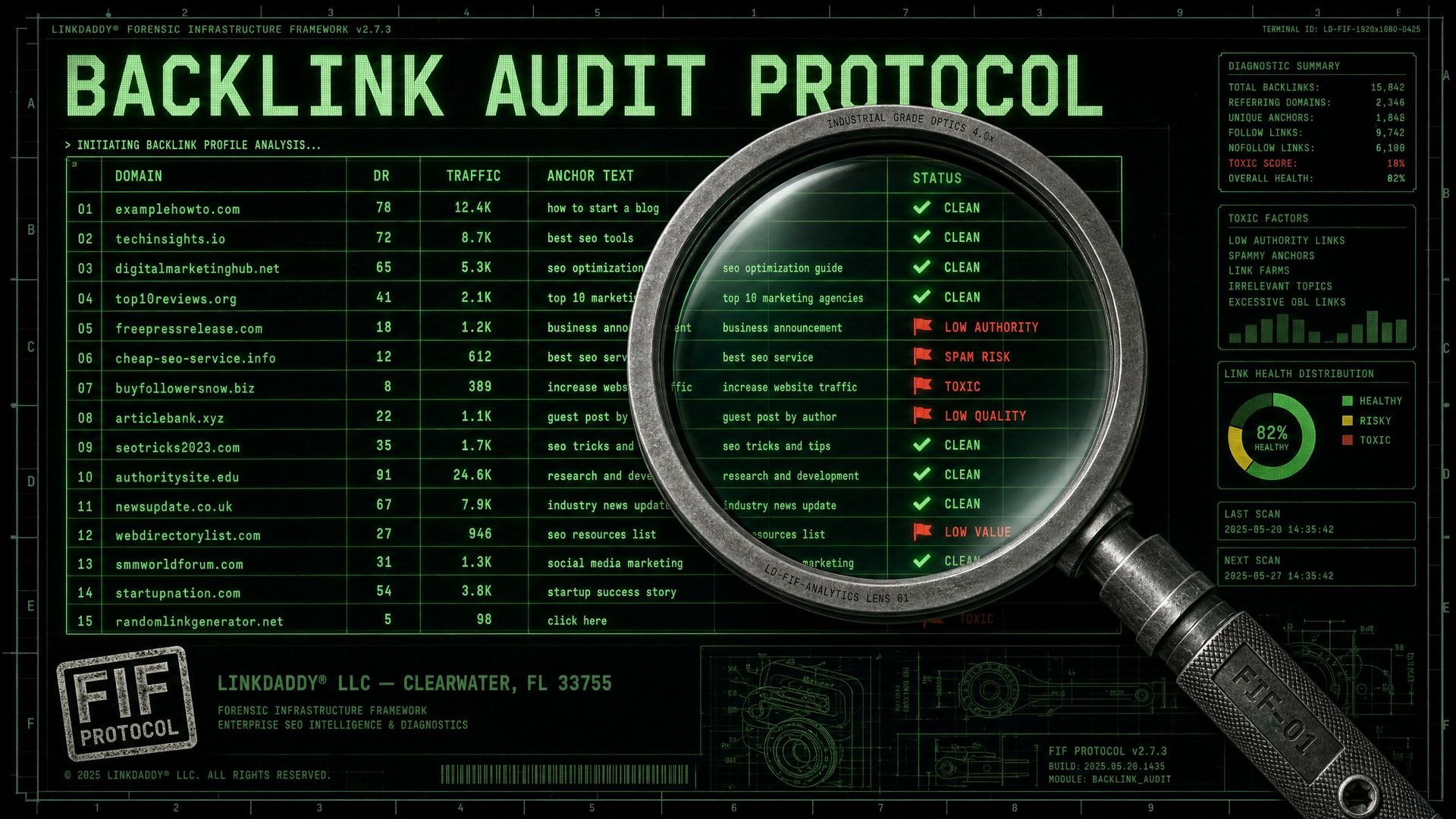
Your backlink profile is the structural foundation of your digital entity. If that foundation is built on toxic link farms, irrelevant domains, and over-optimized anchor text, your rankings will eventually collapse under the weight of a Google algorithm update.
Conducting a forensic backlink audit is not just about finding bad links; it's about understanding your structural integrity, identifying gaps in your topical authority, and ensuring your link velocity appears natural to AI answer engines.
The Forensic Audit Process
Step 1: Data Aggregation
No single tool has a complete index of the web. To conduct a true forensic audit, you must aggregate data from multiple sources. Export your backlink profiles from Google Search Console, Ahrefs, and Majestic, then combine them into a single master spreadsheet, removing duplicates.
Step 2: Toxic Link Identification
Sort your master list and look for the hallmarks of toxicity. You are looking for domains with zero organic traffic, massive outbound link ratios, foreign language TLDs (if you are a local US business), and known link farm IP blocks.
Step 3: Anchor Text Analysis
Analyze your anchor text distribution. If more than 5-10% of your links use your exact target keyword, you are at risk of an over-optimization penalty. The solution is not always to remove those links, but rather to build a large volume of branded and naked URL links to dilute the exact match percentage.
Frequently Asked Questions
What is a backlink audit?
A backlink audit is a comprehensive review of all the links pointing to your website. The goal is to identify high-value links, discover toxic or spammy links that could trigger a penalty, and analyze your anchor text distribution.
How do I find toxic backlinks?
Toxic backlinks typically come from link farms, adult sites, foreign language domains irrelevant to your business, or sites with zero organic traffic. Tools like Ahrefs, Semrush, and Google Search Console can help identify these.
What is the Google Disavow Tool?
The Disavow Tool is a feature in Google Search Console that allows you to tell Google to ignore specific backlinks pointing to your site. It should only be used if you have a manual penalty or a massive influx of obvious spam links.
How often should I audit my backlinks?
For established websites, a quarterly backlink audit is recommended. If you are actively engaged in aggressive link building campaigns, you should monitor your profile monthly to ensure natural velocity and anchor text distribution.
What is anchor text over-optimization?
Over-optimization occurs when too many of your backlinks use the exact same target keyword as the anchor text (e.g., 50% of your links say 'buy cheap shoes'). This is a strong signal of manipulation and often leads to algorithmic penalties.
Need a Forensic Audit?
LinkDaddy provides comprehensive backlink audits and structural recovery plans for domains suffering from algorithmic decay.
Request an Audit